
Whether it is a Saint-Emilion Grand Cru, a Margaux, a Pomerol or any other appellation, knowing how to keep your bottles is essential. Poor temperature or inadequate storage can alter even the most promising vintage. Conversely, good storage conditions reveal all the expression of a wine, whether it is a red wine intended for aging or a vintage that you want to let evolve patiently.
In this guide, Mähler-Besse, a Bordeaux wine trading house specializing in Grands Crus, old vintages and high-end selection, shares with you the essential rules for keeping your bottles like a professional.
The ideal temperature: the golden rule of conservation
Stability is key. To preserve your recently acquired wines, like your old vintages, the temperature must be between 10 and 14°C, without sudden variations.
Bordeaux red wines, such as Saint-Estèphe, Margaux or Saint-Emilion, evolve perfectly in fresh and constant environments. Too high a temperature accelerates aging, while too intense cold slows down the aromatic evolution.
An oenologist or cellar master will tell you: a wine must age slowly to develop its full potential.
Humidity: preserve the cork to preserve the wine
A humidity level between 65% and 75% is ideal.
Too low, it dries out the corks; too high, it promotes mold on the labels.
In the cellars of major Châteaux such as Cheval Blanc or Château Palmer, this humidity is carefully controlled. It protects the cork and maintains the watertightness essential for the good evolution of a vintage.
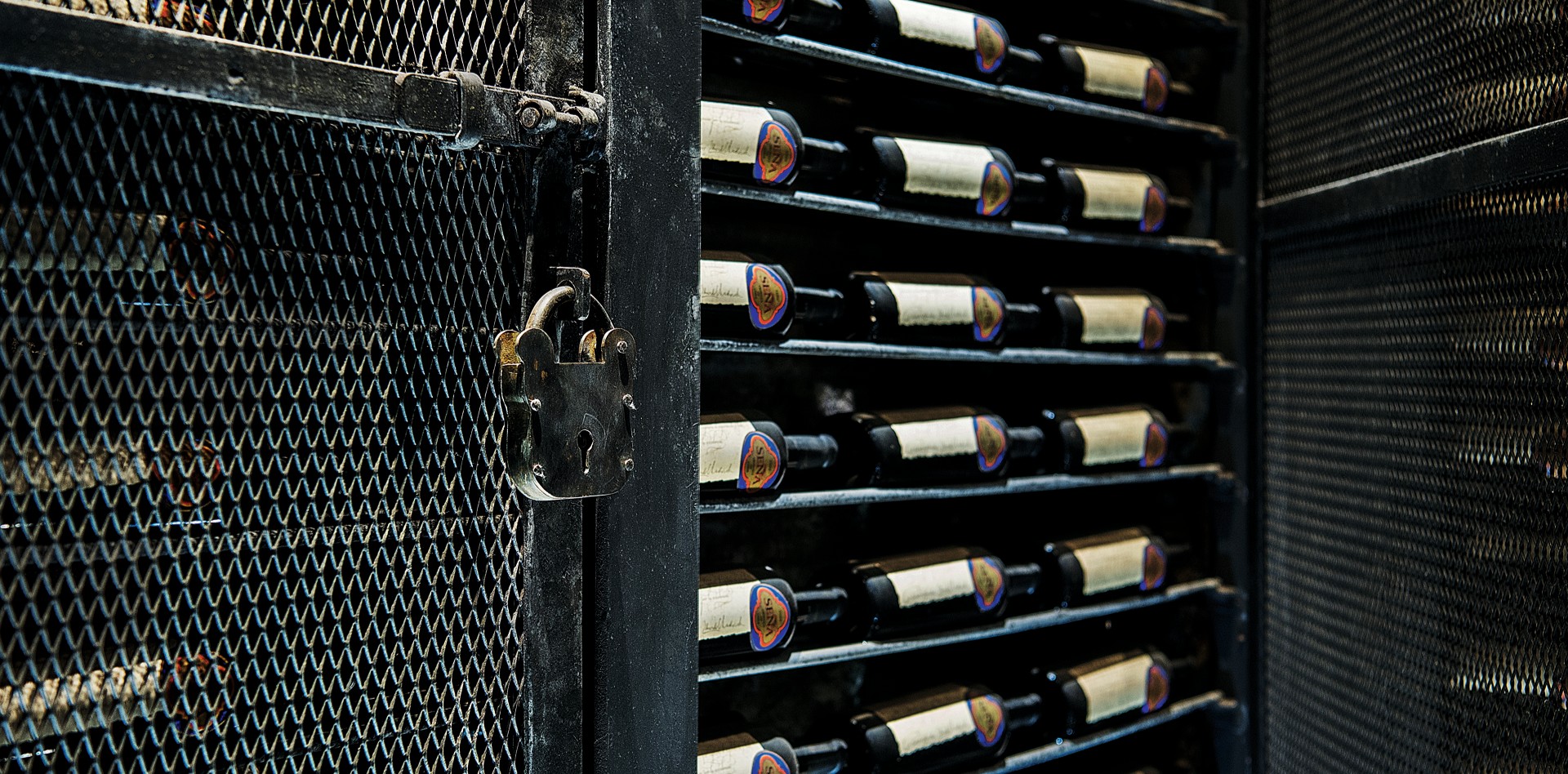
Wine can be stored horizontally
For corked bottles, the contact of the wine with the cork prevents it from drying out.
Whether your wine is a Grand Cru or comes from a more confidential Château, it should always be stored lying down.
Bottles closed with a screw cap can be stored upright, but in a temperate and dark space.
The crucial role of darkness
Light is the enemy of wine. It alters its pigments and disrupts its evolution.
This is why cellars and cellars are deliberately dark.
At home, choose a space without direct light, or opt for a wine cellar equipped with anti-UV glass.
Storage times: how long should you keep your wines?
Custody periods vary according to:
- The grape variety (Cabernet Franc and Cabernet Sauvignon age very well)
- The land
- The style of the estate
- The potential of the vintage
A Grand Vin like a smaller Château can evolve over several decades under good conditions.
If you have bottles that you are hesitant to open for your next dinner, do not hesitate to ask for personalized advice to determine the ideal tasting window.
Wine cellar or natural cellar: what to choose?
If you don't have a traditional cellar, an electric wine cellar is an excellent alternative. Multi-zone models make it possible to maintain:
- Ready-to-drink wines
- Wines whose vintage is in the process of evolution
- Collection wines
- Grands Crus for a long time
Collectors and professionals such as wine shops, restaurants or wine bars often opt for high-end cellars.
For wine lovers who simply want to keep their bottles in good conditions, there are many efficient and aesthetic electric wine cellar models.